

Home / Course Detail
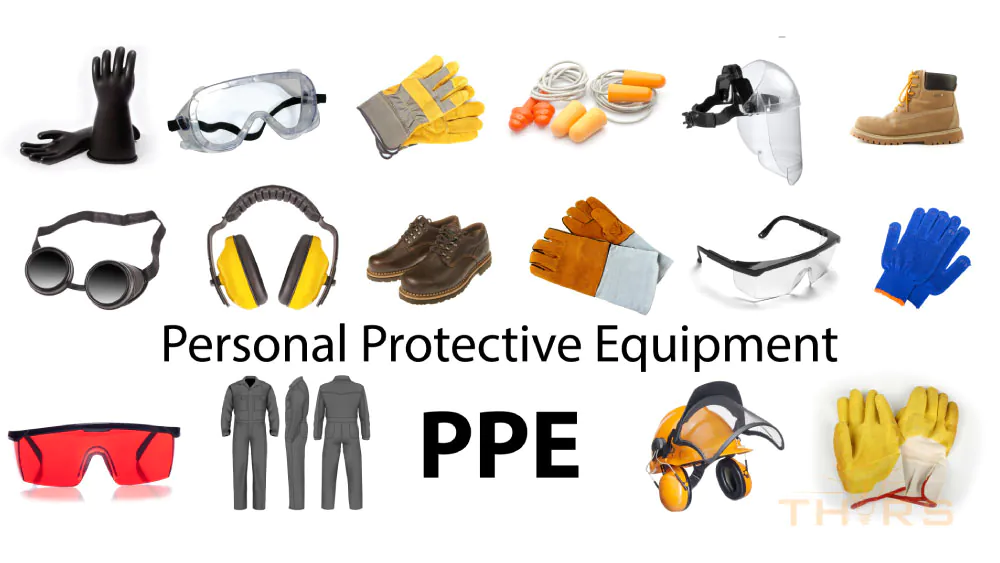
This course supports organisations to comply with health and safety legislation, including the Personal Protective Equipment at Work Regulations 1992, by reducing the risk of workplace accidents in high-risk environments.
Not all workplace hazards can be fully controlled or eliminated.
When hazards in the work environment cannot be ‘engineered out’, or when guards, shields and other safety devices have limited effectiveness, there will often be a need to wear personal protective equipment.
It is important to understand that Personal Protective Equipment (PPE) is not a substitute for hazard control, but the last safety option to be implemented after all other practical safety measures have been considered and applied.
Personal protective equipment therefore is rarely used in isolation and is often incorporated into safety procedures as an added protection should an accident occur.
This program examines various types of Personal Protective Equipment in detail, including:
The types of RPE and the purpose.
Step by step instructions on how to fit RPE correctly.
How to maintain RPE and when to replace it, considering particulate filters, disposable masks and gas/vapor filters.
Dos and don’ts for using respirators safely.
Hazards to eyes and face including dust, gas, liquid and vapour.
Types of eye and face protection available and how to ensure equipment is used safely and well maintained.
Hazards to the head and neck, the different types of head protection available, how to wear head protection correctly, how to store it and when it should be replaced.
Hazards to the hands and arms including temperature, cuts, chemicals, radiation, prolonged immersion in water, abrasions, impact, electric shocks and biological agents.
Types of protection that can be used to protect hands and arms, including different types of gloves.
The dos and don’ts of hand and arm PPE and hygiene practices to follow.
Looking at the situations when hearing protection must be worn, noise action levels and an employer’s responsibilities, particularly relating to workplace health surveillance.
Types of hearing protection and when each is suitable.
How to fit different types of hearing protection correctly, and how to test whether ear protection is working properly.
The dos and don’ts of using hearing protection equipment.
Looking at the following types of protection and when to use them, including:
This program is designed for all personnel who are required to wear personal protective equipment. It is a general program suitable for induction or to reinforce the need to wear items of personal protection.
PPE Training is suitable for anyone whose job requires them to wear PPE, such as those who work in the construction industry.
Why Choose Rigx
Approved Institute
Certified Tutors
Latest Study Material
Dedicated Team
5+ Years of Experience
At Rigx, we are dedicated to delivering excellence in education and training. Our approved institute, combined with certified tutors and the latest study materials, ensures you receive top-quality learning tailored to today’s industry standards. Supported by a passionate and dedicated team with over 5 years of experience, we strive to empower every student to achieve their career goals and succeed in their professional journey. Choose Rigx for a trusted partner in your educational success.
Related Courses
This course is designed to give staff extra responsibility a further insight into the correct procedures and actions to be taken to ensure safety and prevention with regards to fire.
Designed for learners who have prior qualifications or experience working in confined spaces and wish to specialize or demonstrate occupational competence in emergency rescue specifically
The IOSH certificate in OSH principles and practice is a global qualification, built on the IOSH competency framework. It offers a clear career gateway for new and aspiring OSH professionals…